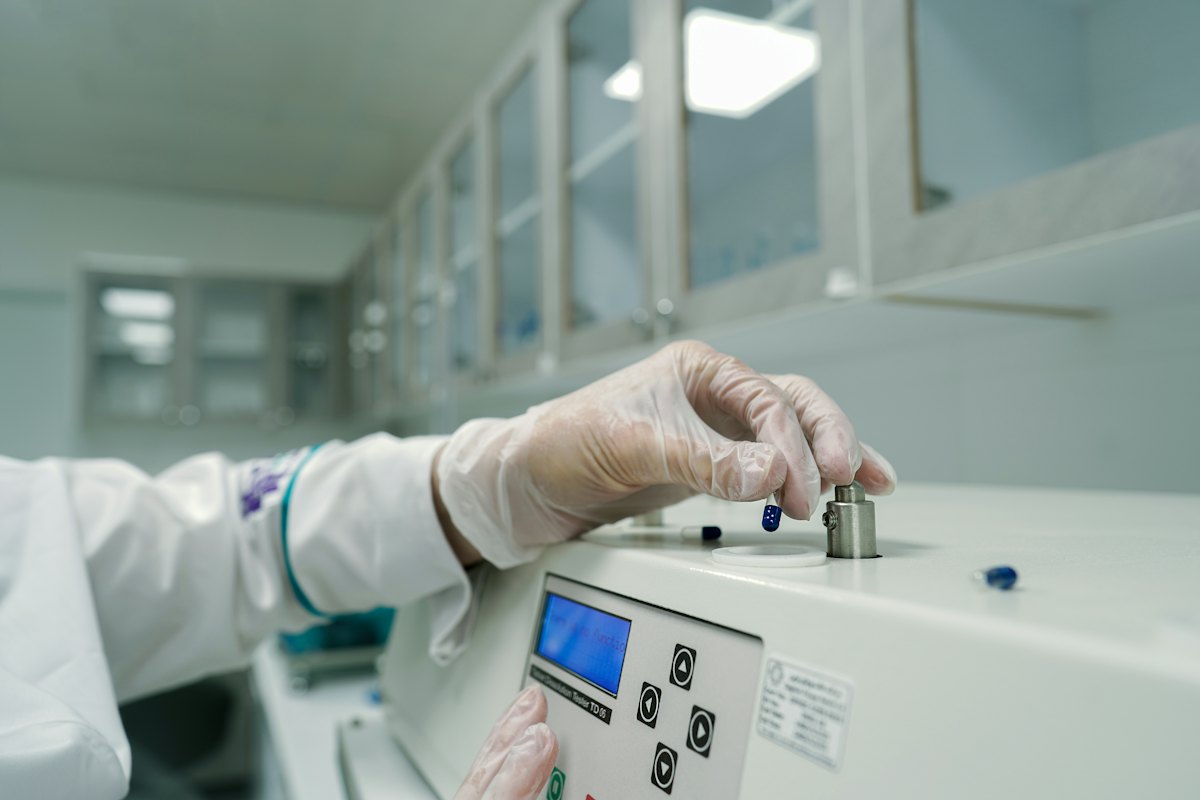
An out-of-specification (OOS) result is a test result that falls outside the specification or acceptance criteria set in the marketing authorisation, the pharmacopoeia or the company's own approved documents. It is one of the few events in a pharmaceutical quality system where the record is read line by line during almost every inspection, because it sits exactly where a batch decision is made. A well-run OOS investigation protects the patient and the batch disposition. A poorly run one is the textbook route to the phrase inspectors use most often in this area: testing into compliance.
This guide walks through the process in the order it actually happens, from the moment an analyst sees the result to the moment the Qualified Person decides on the batch. It also covers the record fields that make an OOS file defensible, and the mistakes that turn an OOS into a finding.
OOS, OOT and atypical results: get the definition right first
Sites get into trouble when the definitions in the procedure are vague, because vague definitions allow results to be reclassified after the fact. Three categories are worth separating clearly in the SOP:
- Out of specification (OOS): a reportable result outside the approved specification limit. It always triggers the OOS procedure, for release testing, stability, in-process controls with formal limits and raw material testing alike.
- Out of trend (OOT): a result that is within specification but does not follow the expected pattern, for example a stability assay dropping faster than the other time points predict. It needs its own defined handling and evaluation, and it is often the early warning that a later OOS is coming.
- Atypical or aberrant result: within limits but unusual for the method, such as an unexpected peak or a replicate spread wider than normal. The procedure should say who evaluates it and when it escalates.
The key rule is that classification is based on the reportable result as defined in the method, not on how comfortable the site is with it. If a single replicate is outside limits and the method defines the reportable result as the individual value, it is an OOS. Averaging it away is not an option.
EU GMP Chapter 6 sets the baseline: the quality control department needs a written procedure for investigating out of specification and out of trend results (6.7), and any out of trend or out of specification data should be addressed and investigated (6.9). In the United States, the FDA guidance Investigating Out-of-Specification (OOS) Test Results for Pharmaceutical Production, updated in 2022, describes the expected investigation in detail, and many EU sites use it as a reference as well.
Step 1: stop, preserve and report
The first actions happen at the bench, before anyone knows whether the result is real. The analyst should not discard anything: the sample and standard solutions, the prepared dilutions, the vials in the autosampler, the glassware where practical, the instrument and its electronic data all stay exactly as they are. The analyst reports the result to the supervisor promptly, typically the same working day, and an OOS record is opened with a unique number.
Two things go wrong here more than anywhere else. The first is a quiet re-injection 'to check' before the result is reported, which creates data outside the investigation. The second is a run that is aborted or reprocessed without the original being kept. Both are visible in the audit trail, which is why the audit trail review for the run belongs in the investigation file. The checks are described in the guide Audit trail review checklist: what to look for, how often, and how to record it.
Step 2: Phase I, the laboratory investigation
Phase I asks one question: is there clear, documented evidence that the result was caused by a laboratory error? It is led by the supervisor together with the analyst, and it is deliberately limited to the analysis itself. The UK MHRA's OOS guidance splits it into Phase Ia, a quick check for obvious errors such as a calculation mistake or a spilled sample, and Phase Ib, a hypothesis-driven laboratory investigation when the obvious checks find nothing. Many sites outside the UK use the same split.
- Interview the analyst: what was done, in what order, was anything unusual noticed at the time? The interview is recorded, not just held.
- Check the calculations, the transcription of weights and dilutions, and the integration of chromatograms against the method parameters.
- Confirm the correct method version, reference standard, reagents and lot numbers were used, all within expiry and correctly prepared.
- Confirm the instrument was qualified, calibrated and within its maintenance schedule, and that system suitability passed for the run.
- Review the electronic data and audit trail for the run: injections, reprocessing, aborted sequences, changed integration parameters.
- Examine the retained solutions where the method allows it, for example re-injecting the same preparation to test a specific instrument hypothesis.
If Phase I finds an assignable laboratory cause supported by evidence, such as a documented dilution error or a failed system suitability that was overlooked, the original result can be invalidated and the test repeated on the original sample. The invalidation, the evidence and the approval by quality are all part of the record. If no assignable laboratory cause is found, the OOS is treated as confirmed for the purposes of the investigation, and the file moves to Phase II.
Step 3: Phase II, the full investigation
Phase II widens the scope beyond the laboratory to manufacturing and the process. It is a quality investigation in its own right, run under the same discipline as any major deviation and often linked to a deviation record. The process described in Deviation management in pharma: the process step by step applies here as well: containment, classification, root cause, impact assessment and CAPA.
- Manufacturing review: the batch record, in-process controls, equipment logs, environmental data and any deviations or changes affecting the batch.
- Materials: the raw material and component lots used, their supplier history and any related complaints or OOS results.
- History: earlier OOS and OOT results for the same product, test, method or instrument, at this site and at others making the product.
- Scope: other batches that could share the cause, made on the same equipment, with the same material lot, or in the same campaign.
Where the investigation points to a person, for example an operator or analyst who made a mistake, the reasoning in Human error in root cause analysis: why it is rarely the real root cause applies. Invalidating a result as 'analyst error' on assumption, with no real evidence behind it, is one of the most frequently cited OOS deficiencies.
Retesting and resampling: the rules that keep you out of trouble
Additional testing is where testing into compliance happens. The FDA OOS guidance uses exactly that phrase for testing repeatedly until a passing result appears and then disregarding the OOS result without scientific justification, and calls the practice unscientific and objectionable. The rules must therefore be written in the SOP before any OOS occurs, not decided case by case.
- Retesting means testing a new portion of the original, homogeneous sample. It is justified when Phase I found a laboratory error, or as part of a planned Phase II protocol. The maximum number of retests is fixed in advance in the SOP and is not adjusted depending on the results obtained.
- Where practical, the retest plan includes a second analyst who is at least as experienced and qualified in the method as the original analyst, and it states in advance how the results will be evaluated.
- Resampling means taking a new sample from the batch. It is only justified when there is evidence that the original sample was not representative or was compromised, for example a sampling error or a damaged container. Resampling because the first result failed is not a justification.
- Averaging cannot be used to hide an individual result that is out of specification when the specification applies to individual values, and an average should never be reported without the individual results behind it.
- An outlier test should not be used to invalidate a suspect result from a validated chemical test on a homogeneous sample: it is only a statistical analysis and does not identify a cause. Outlier tests can be appropriate for highly variable biological assays, and where they are used at all, the specific test and its parameters are defined in the procedure in advance.
If retests pass but the original OOS was never invalidated by a documented assignable cause, the investigation is not finished. A passing retest does not make the original result disappear. The batch decision has to consider all the data, and the investigation has to explain why the results differ.
The record: fields an inspector expects to see
Whether the OOS lives in a paper form or in an electronic quality system, the same information has to be there and has to be traceable. A record that is missing any of these is hard to defend:
- Unique OOS number, product, batch, test, method and specification, and the stage (release, stability, in-process, raw material).
- Original result, date and time it was obtained and reported, analyst, instrument and the reference to the raw data.
- Phase I checklist with each item answered, the analyst interview and any hypothesis tests with their pre-written plan and outcome.
- Conclusion of Phase I: assignable laboratory cause found or not, with the evidence, and quality approval of any invalidation.
- Phase II scope, the manufacturing and materials review, the history check and the other batches assessed.
- All retest or resample results, with the plan that authorised them and who performed them.
- Root cause or most probable cause, the impact on the batch and on other batches, and linked deviation and CAPA numbers.
- Batch disposition decision, by whom, and the date of closure, with any extension justified.
Closing the investigation and deciding on the batch
If the OOS is confirmed, the batch is normally rejected, and the investigation must assess whether other batches are affected. If the OOS is invalidated, the batch decision is based on the valid results, and the record must show why the invalidation stands. In both cases, the Qualified Person needs a closed investigation, or at least a completed investigation for everything relevant to that batch, before certification.
Timelines matter. Most sites set around 30 days for an OOS investigation, with a documented and approved extension if more time is genuinely needed. For the ongoing stability programme, EU GMP Chapter 6 (6.35) requires any confirmed out of specification result or significant negative trend affecting batches already on the market to be reported to the relevant competent authorities, with the impact on those batches considered under Chapter 8 (complaints, quality defects and recalls). For products approved in the United States, a Field Alert Report is due within three working days for an OOS on a distributed batch unless the result is invalidated within that time. Both deadlines are far easier to meet when the investigation has kept pace.
Trending: what one OOS cannot tell you
Each OOS is investigated on its own, but the system is judged on the pattern. Trend OOS and OOT results by product, test, method, instrument, analyst and outcome, and pay particular attention to the share of results invalidated as laboratory error. A high or rising invalidation rate either means the laboratory has a real problem with methods, equipment or training, or that real product failures are being explained away. Either way, it is something quality management review should see, not something an inspector should discover.
OOS investigation checklist
- The result was reported promptly, and all solutions, preparations and electronic data were preserved.
- Phase I covered calculations, method, standards, reagents, instrument status, system suitability and the audit trail, with every item answered.
- Any hypothesis test was planned in writing before it was run.
- Invalidation of the original result rests on documented evidence of an assignable cause and is approved by quality.
- Retests and resamples follow a pre-defined plan, with the number of tests fixed in advance.
- No individual OOS value was averaged away, and no outlier test was used to discard a chemical result without justification in the procedure.
- Phase II reviewed manufacturing, materials, history and other potentially affected batches.
- Root cause, CAPA and linked deviation numbers are recorded, with an effectiveness check where the cause is systemic.
- The batch decision is documented, made after the relevant investigation was complete, and the record is closed on time or with an approved extension.
- OOS and OOT results, including the invalidation rate, are trended and reported to management review.
The test of an OOS system is simple: could someone who was not there pick up the file and reach the same conclusion from the evidence in it? If the answer is yes, the investigation protects the patient, the batch and the site. If it relies on 'analyst error' and a passing retest, it is waiting to become a finding.
Frequently asked questions
What is an OOS result in pharma?
An out-of-specification result is a test result that falls outside the specification or acceptance criteria in the marketing authorisation, the pharmacopoeia or approved company documents. It applies to release, stability, in-process and raw material testing, and it always has to be investigated.
What is the difference between Phase I and Phase II of an OOS investigation?
Phase I is the laboratory investigation: it looks for documented evidence of a laboratory error in the analysis itself. Phase II starts when no laboratory cause is found and widens the investigation to manufacturing, materials, process history and other batches.
When can an OOS result be invalidated?
Only when the investigation finds an assignable laboratory cause supported by documented evidence, such as a calculation error or a confirmed equipment fault, and quality approves the invalidation. A passing retest on its own is not evidence that the original result was wrong.
How many retests are allowed after an OOS?
There is no universal number. The number of retests and how the results will be evaluated must be defined in the procedure or the investigation plan before testing starts, not decided after seeing results. Retesting until a passing result appears is testing into compliance.
What is the difference between OOS and OOT?
An OOS result is outside the specification limits. An out-of-trend result is still within specification but departs from the expected pattern, for example an unusually fast decline over a stability study. OOT results need their own evaluation and are often an early warning of a future OOS.